
 JGU INTERNATIONAL
Sustained by the spirit of Franco-German friendship
Mainz and Dijon – these two cities represent a European success story, especially in terms of the partnership between their universities. German-French double degree programs have been running for over 30 years. And yet coordination remains a constant challenge, as Professor Antje Lobin, head of the Dijon Office at Mainz University, explains. Currently, one of the main focuses is the binational teacher training program.
 JGU INTERNATIONAL
Supporting Ukrainian academics
Following the Russian invasion of Ukraine, a large number of Ukrainian academics had to leave their home country. Many of them have been welcomed as guests at German universities. We have met four of them who are currently working at Johannes Gutenberg University Mainz.
 SUSTAINABLE CHEMISTRY
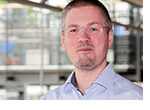
"We need a thorough shake-up of our global energy industry"
Professor Carsten Streb and his team at the Department of Chemistry of Johannes Gutenberg University Mainz (JGU) have developed a molecule that is capable of storing solar energy and releasing it whenever required. Their pioneering work represents a possible solution to the worldwide energy crisis.
 VOLCANOLOGY
What’s bubbling below the Eifel plateau?
A seismological campaign, the first of its kind in Germany, is being carried out to determine the status of the roughly 800 essentially dormant volcanoes in the Eifel region. The objective of the new project is to find out whether any of these volcanoes could again become active and what exactly is happening below the surface. What do we have to expect in the future? Professor Luca De Siena of the Institute of Geosciences at Johannes Gutenberg University Mainz (JGU) is a member of the survey team. He is to generate computer models from the newly obtained data to understand future volcanic activity in the Eifel region..
 ANTHROPOLOGY
A new world order of cultural production
CEDITRAA was launched in 2021 as a joint project of the Rhine-Main Universities (RMU) alliance in cooperation with the Pan-Atlantic University in Lagos. The project aims to investigate cultural entrepreneurship in Africa and Asia and the role of digital media in the international dissemination of the related output.
 JOURNALISM
Project MIMI builds connections with Jerusalem
MIMI – Migration, Media, and Integration – is a project at Johannes Gutenberg University Mainz (JGU) that helped to establish a cooperation between the the Hadassah Academic College in Jerusalem and Mainz University in 2021. Headed by Anna Fabienne Makhoul, MIMI could be the springboard for a new lively academic exchange. The first two seminars were a great joint success.
 POLITICAL ANTHROPOLOGY
Disciplined empathy as an important tool in highly political times
For over a decade, Franziska Fay conducted research on the Zanzibar Archipelago. There she worked with child protection organizations, children in primary and Koranic schools, was a guest lecturer at Zanzibar University, and advised international aid organizations. After completing degrees in Frankfurt and London, she was appointed Junior Professor of Political Anthropology at the Department of Anthropology and African Studies at Johannes Gutenberg University Mainz (JGU) in 2021.
 EU RESEARCH FUNDING
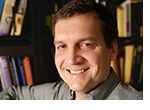
The role of the Monastic Republic of Mount Athos in the Middle Ages
Dr. Zachary Chitwood, lecturer in Byzantine Studies at Johannes Gutenberg University Mainz (JGU), has been awarded an ERC Starting Grant to fund his research project MAMEMS. This is despite the fact that research in the humanities and social sciences rarely seems to take advantage of this form of financial support although grants from the European Research Council are specifically designed to sponsor innovative research of all kinds.
 LIFE SCIENCES
The search for causes of neurodegenerative diseases
In spring 2021, the Faculty of Biology at Johannes Gutenberg University Mainz (JGU) was lucky to acquire a specialist in the field of neurodegenerative disorders – Professor Dorothee Dormann. A cell biologist and biochemist by training, she is an expert in identifying the molecular processes that underlie conditions such as Alzheimer's disease and has already won several awards for her research.
 COMPUTER SCIENCE
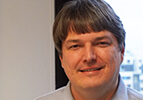
Powerful technologies may help overcome future challenges
How will the field of artificial intelligence (AI) develop in the coming years? What sort of risks, what chances will open up? Professor Stefan Kramer of the Institute of Computer Science at Johannes Gutenberg University Mainz (JGU) is to find answers to these questions – in an interdisciplinary research project in which he and his colleagues will investigate core aspects of AI over the next six years.